











Forebet's sports section brings forecasts and match data together for Nigerian readers following local, African and international competitions. Football remains the largest part of the coverage, but the page also provides context for tennis, basketball and darts. Forecasts draw on information such as recent form, head-to-head records, home and away performance, scoring patterns and, where available, expected-goals data. These figures offer a structured view of a fixture rather than a guarantee of its result.

Matches are grouped by competition, which makes it easier to compare a team's current record with the level and schedule of its league. The today's predictions page is useful when you want to review fixtures in kick-off order, while a single match should still be assessed using the available context around line-ups, travel and competition priorities.
Football Predictions
Football is the backbone of Forebet's analytical coverage. Nigerian supporters can follow major European leagues, African qualification fixtures, domestic cup ties and youth competitions in one broad sports environment. A forecast may combine recent results with home and away splits, goal averages, defensive records and the strength of opponents faced. Looking at several indicators together is more useful than treating a winning or losing streak as a complete explanation.
Match statistics also need to be read in context. A side that has scored freely against weaker opposition may face a different test against a compact defence, while a team with modest results may have created enough chances to suggest improvement. Probability figures describe the model's assessment at a particular time, so late team news and confirmed starting line-ups can change the practical picture.
UEFA Club Competitions
The Champions League, Europa League and Conference League have different competitive settings, and fixture analysis should reflect them. In the Champions League, squad depth and travel can become important during busy weeks, especially when a club alternates between domestic and European matches. Knockout ties also create tactical caution: a first-leg approach may differ sharply from the more open football often seen when a team must chase the aggregate score.

The Conference League often includes clubs with less shared European history, so long-term head-to-head records may be limited. Domestic league form, defensive consistency, set-piece performance and home advantage can therefore provide more relevant evidence. For all UEFA tournaments, the competition stage, squad rotation and the difference between home and away performance deserve attention alongside the model output.
English Football - From the Premier League to the Lower Tiers
England's football pyramid offers unusually deep statistical coverage. The Premier League attracts the widest audience, but the Championship, League One, League Two, EFL Trophy and selected semi-professional divisions each present different analytical conditions. The Championship's crowded schedule can test squad depth, whereas matches in the lower tiers may be shaped more strongly by set pieces, physical contests and changes in personnel.
League position alone does not explain every fixture. Compare recent home and away records, goals scored and conceded, the quality of recent opponents and the number of days since the previous match. The professional development league adds another complication because academy line-ups can change frequently; youth results should be treated as a less stable sample than senior league performance.
Egyptian and African Football
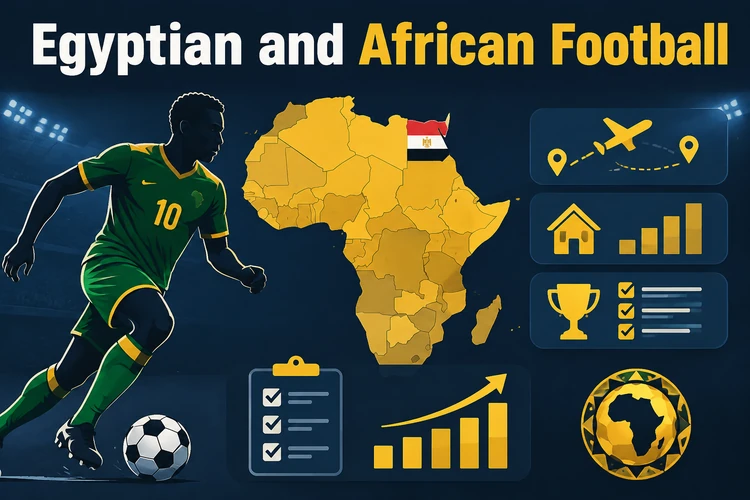
Forebet's football coverage also includes Egyptian competitions and CAF qualification fixtures. In Egypt, the available statistical detail may not be as consistent as it is in the largest European leagues, and squad rotation can affect the value of older results. Recent team performance, scoring trends and the reliability of home form may therefore deserve extra weight when comparing two sides.
CAF World Cup qualification matches require additional context. Long journeys, climate, pitch conditions and short international windows can influence performance, while home advantage may vary considerably between venues. Ratings and previous results help establish a baseline, but they should be combined with the stage of the campaign, the importance of the points and the likely availability of key players.
For fixtures scheduled on the following day, the tomorrow's predictions page provides a practical way to check the next set of matches. It is still sensible to verify official team information before drawing conclusions from an early forecast.
UEFA Youth League and International Youth Tournaments
Youth football requires a different reading of the numbers. Under-19 squads change quickly, players move between age groups, and the historical sample for a particular line-up may be small. Recent youth-team results and the resources of the parent club can help, but neither should be treated as a substitute for confirmed personnel and current competition form.
International under-20 tournaments add another layer because teams assemble for a limited period and may have different tactical styles. Forecasts can help organise the available evidence, while uncertainty should be expected to be wider than in a long-running senior league with stable squads.
Club Friendly Matches
Friendly matches are among the hardest fixtures to interpret. Managers may test formations, give young or fringe players minutes, or manage workloads during pre-season. A result in a friendly is consequently less comparable with a competitive league result, and a high-scoring game may reflect experimentation rather than a permanent attacking improvement.
When reviewing a friendly forecast, check the stated purpose of the match, the stage of each club's preparation and the expected level of rotation. Treat the probability output as a starting point, not as evidence that both teams will approach the game with normal competitive intensity.
Tennis Predictions
Tennis analysis is based on the individual rather than a team system. Surface is a central factor: a player's clay-court record may say little about performance on grass or a fast indoor hard court. Recent break-point conversion, service games won, return quality, head-to-head results on the same surface and the physical demands of previous rounds can all influence a forecast.
Coverage spans ATP and WTA events as well as Challenger and ITF tournaments. Lower-level matches can be more difficult to assess because data samples are smaller and withdrawals or schedule changes may occur with little warning. Table tennis has a different rhythm again, with serve-return patterns, short matches and rapid momentum changes making recent competitive activity particularly relevant.
Basketball Predictions
Basketball produces a large volume of measurable events. Pace, offensive and defensive efficiency, turnover rate, rebounding and shooting splits help describe how a team creates and prevents scoring opportunities. For NBA fixtures, back-to-back scheduling and travel can matter because the regular season is compressed, while injury information can alter a team's expected rotation.
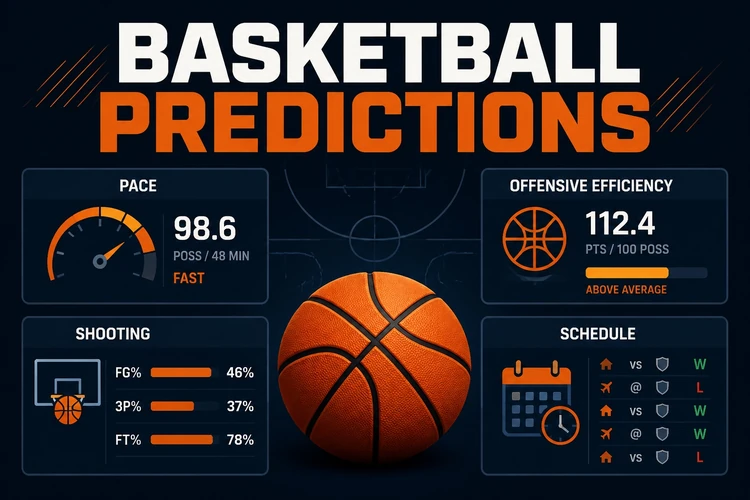
European leagues and international competitions can have different tempos, roster rules and schedule patterns. Comparing raw points per game across leagues may be misleading, so efficiency rates and opponent strength provide a better basis. The predictions page offers a broader view of available events across the sports covered by the site.
Darts Predictions
Darts forecasts rely on player-level performance indicators. Three-dart average, checkout percentage and first-nine average help measure scoring and finishing form, while tournament format can affect pressure and pacing. A long event may also expose differences in consistency that are not visible in a single match.
Historical results can provide useful background, but recent form and the specific stage of a tournament should remain part of the assessment. As with every sport, a statistical forecast expresses probability rather than certainty.
Why Statistical Analysis Improves Your Understanding
Good statistics reduce the influence of recency bias and memorable narratives. A team may have won three consecutive matches while creating fewer chances than its opponents, or it may have lost narrowly despite producing a strong underlying performance. Expected goals, shot quality, opponent strength and home-and-away splits can reveal those differences.
The most useful approach is to compare several indicators and note what the data cannot show. Confirmed line-ups, motivation, weather, travel and late injuries may not be fully reflected in an early forecast. Sports forecasting cannot guarantee an outcome, but it can provide a consistent framework for reviewing a fixture and deciding how much uncertainty remains.
FAQ
The page covers football across international, European and African competitions, along with tennis, basketball and darts. Football includes major leagues, selected lower divisions, qualification matches, youth tournaments and friendlies.
The statistical model uses factors such as recent form, head-to-head records, home and away performance, scoring trends and expected-goals data where available. It produces probability estimates for possible outcomes and goal totals; these are estimates, not guarantees.
Yes. Coverage includes the Championship, League One, League Two, the EFL Trophy and selected semi-professional competitions. Because schedules, squad depth and playing styles differ by tier, the figures are most useful when read within the relevant league context.
Consider home advantage, travel distance, venue conditions, the short international window and likely squad availability. These factors can make an international fixture less comparable with a club match played in a stable weekly schedule.
Yes. The coverage extends beyond the largest ATP and WTA events to Challenger and ITF tournaments. Surface-specific records, recent workload, service and return numbers, and withdrawals are useful checks when reviewing a lower-level match.
Pace, offensive and defensive efficiency, turnovers, rebounding and shooting splits describe how a team creates scoring chances. Schedule effects, injuries and rotation depth are also important, particularly in leagues with frequent back-to-back games.